

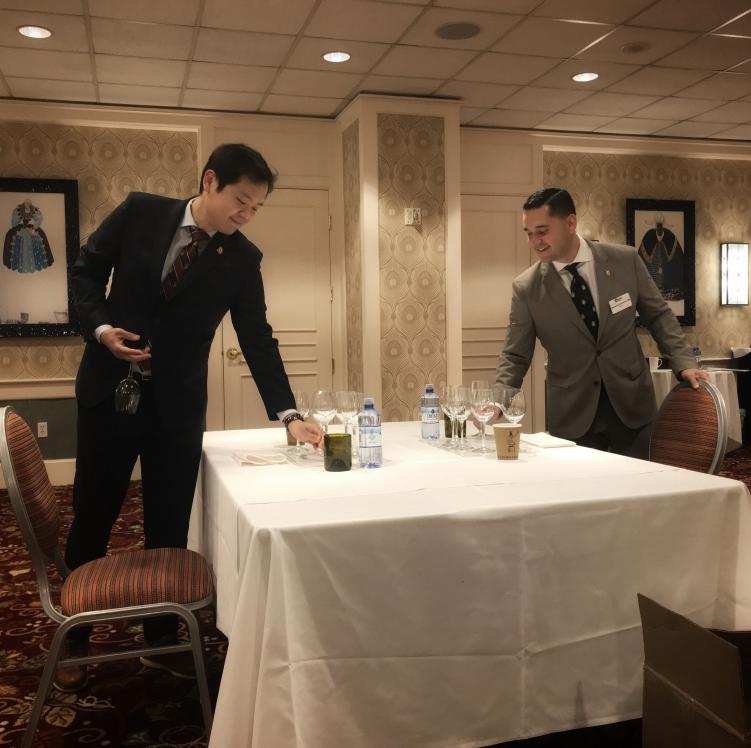
Master Sommelier Diploma Examination
Please read the following which details the structure, pricing and application systems for the Master Sommelier Examination. Note that the Court of Master Sommeliers, Americas and EU chapters have different policies for applying to Advanced and Master's exams. Please read our Examination Site Policy for more information.
All candidates wishing to submit intent for the Master Sommelier Diploma Examination must complete the application; emails stating intent will not be accepted.
Application of intent for the 2024 Master Sommelier Diploma Examination, Theory or Hospitality & Service Practical and Tasting opens on Monday, November 13, 2023.
Deadline to Submit: 11:59 PM PT on Friday, December 15, 2023
Master Sommelier Diploma Examination - Theory: For those sitting the first time or those who have sat in the past but have reset and hold no portions.
Master Sommelier Diploma Examination - Hospitality & Service Practical and Tasting: For those who are holding at least the Theory portion of the Examination.
Master Sommelier Diploma Examination - Theory
The Court of Master Sommeliers, Americas will offer one Theory examination in 2024.
- April 16, 2024 in Atlanta, GA
- Cost: $1059 USD
-
MANDATORY for ALL candidates who
- Are sitting for the first time
- Have sat in the past but have reset and hold no portions
For candidates who pass Theory:
- Candidates are then invited to apply for the Practical and Tasting portions in September 3-5, 2024 in Houston, TX.
- Candidates who opt not to sit for either Practical or Tasting in September 2024 have two more attempts (one per calendar year) to pass Practical and Tasting by the end of 2026.
To submit an Application of Intent:
- DEADLINE to submit application of intent is December 15, 2023.
- Full payment will be due upon receipt of status
- This portion is an oral examination administered exactly as it has been in years past
- There is NO PENALTY for declining this invitation to the Master Sommeliers Diploma Theory Exam
Eligible Advanced Sommeliers may sit for the Master Sommelier Diploma - Theory examination in perpetuity. In the following cases, they will be required to wait an additional year between efforts to allow for the preparation necessary for a reasonable chance of success:
- Any attempt at MS Diploma - Theory without at least a 40% score.
- A second consecutive year’s attempt at MS Diploma - Theory without at least a 50% score.
- A third consecutive year’s attempt at MS Diploma - Theory without passing.

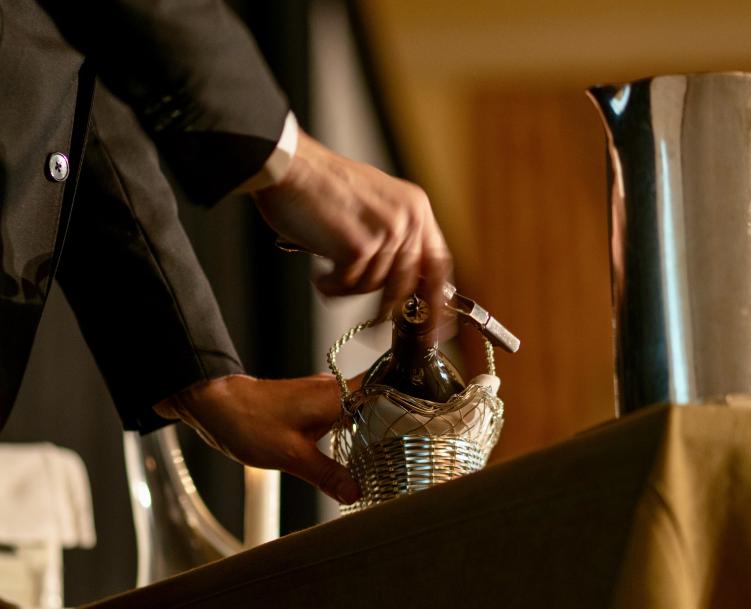
Master Sommelier Diploma Examination - Hospitality & Service Practical and Tasting
The Court of Master Sommeliers will offer one Hospitality & Service Practical and Tasting in 2024
- September 3-5, 2024 in Houston, TX
- Cost: Hospitality & Service Practical Examination $999 USD / Tasting Examination $999 USD / both Hospitality & Service Practical & Tasting Examination $1899 USD
To submit an Application of Intent:
- Application of intent for those candidates who are holding any portion(s)
- DEADLINE to submit application of intent for Hospitality & Service Practical and/or Tasting is December 15, 2023
- Full payment is due upon confirmation of acceptance
More about the Master Sommelier Diploma Examination
The Master Sommelier Diploma Examination is similar in format and content to that of the Advanced Sommelier Examination in that it consists of three parts: a theory examination (an oral examination and not written), a deductive tasting of six wines, and a practical wine service examination. The minimum passing score for each of the three sections is 75% as opposed to 60% for the Advanced Sommelier Examination. Students must first pass the Master Sommelier Diploma Examination-THEORY and then have three consecutive years to pass the remaining two parts of the examination. Thus a student who passes one or two parts may retake those he or she failed in during the next two years. If all three parts are not passed during a three year period the entire exam must be retaken. Members of the examining panel are Master Sommeliers chosen by the Examinations Committee and the Director of Education. The candidate is required to wear professional working attire and to also provide all tools of the sommelier trade for the examination. The candidate should exhibit a high standard of both technical and social skills throughout the examination, and demonstrate the courtesy and charm of a Master Sommelier. It is also essential that the candidate demonstrate excellent salesmanship.

Who can take the Master Sommelier Diploma Examination?
Students who pass the Advanced Sommelier Examination (on the average about 25%-30%) are eligible to apply to take the Master Sommelier Diploma Examination itself. The pass rate for the Master Sommelier Diploma Examination-THEORY is approximately 10%.
Eligible Advanced Sommeliers may sit for the Master Sommelier Diploma Theory examination in perpetuity.
In the following cases, they will be required to wait an additional year between efforts to allow for the preparation necessary for a reasonable chance of success:
- A first attempt without at least a 40% score.
- A second consecutive year’s attempt without at least a 50% score and 5% improvement over the previous year.
- A third consecutive year’s attempt at MS Diploma - Theory without passing.
Elements of the Master Sommelier Diploma Examination
Part 1. Theory: what does the Sommelier need to know?
The theory examination is verbal and is fifty minutes in length.
- Speak with authority on the wine areas of the world and their products.
- Know the principal grape varieties used in winemaking and the areas of the world where they are cultivated.
- Answer questions on international wine laws, including the European Community, United States, Australia and other global wine regions.
- Display knowledge of fortified wines, their vinification, storage and handling.
- Describe the various methods of distillation and the making of spirits and liqueurs, as well as the process of making beers and ciders and the reasons for the variations in style between different products.
- Discuss how the products should be properly stored to ensure that they remain in the optimum condition.
Part 2. Practical Restaurant Wine Service and Salesmanship
- Discuss, recommend and serve aperitifs, displaying a thorough knowledge of their ingredients and production methods as well as the ability to serve them correctly.
- Select, prepare and position glassware necessary for the service of all beverages in the lounge, restaurant, or private function room.
- Discuss menu content and wine list, recommending wines to accompany a wide range of foods; displaying a sound knowledge of the products, their vintages and characteristics.
- Present, offer, prepare, (decanting when necessary) and serve wines, demonstrating a high degree of efficiency and proficiency.
- Present, offer, prepare and serve brandies, liqueurs and other spirits, including knowledge of the proper serving portions for each.
- Handle questions and complaints with skill, elegance and diplomacy.
Part 3. Practical Tasting
The tasting examination is scored on the candidate's verbal abilities to clearly and accurately describe six different wines. Within twenty-five minutes he or she must:
- Identify, where appropriate, grape varieties, country of origin, district and appellation of origin, and vintages of the wines tasted.
SommFoundation provides scholarships for the Advanced Sommelier Course & Examination and Master Sommelier Diploma Examination. Please visit their website at www.sommfoundation.com/scholarships for more information.