
Turn Your Passion for Wine into Professional Expertise
There’s no traditional university degree for beverage service, and you aren’t likely to find wine courses in a typical continuing education setting. The Court of Master Sommeliers fills that gap, offering the leading professional credential in the field. Our wine courses start from our Introductory Sommelier Course all the way to the Master Sommelier Diploma Examination, widely regarded as one of the hardest credentials to earn in any profession.
Our online Introductory Sommelier Course is designed to be practical, approachable, enjoyable, and useful in real life, whether your goal is to feel more confident at a restaurant, advance in hospitality, or simply understand what’s in your glass.
Why Wine Education Matters
Build confidence when selecting and discussing wines
Wine conversations can feel intimidating. The jargon is thick, the options are overwhelming, and most people have never been taught a reliable way to taste or describe what they’re experiencing. Our course changes that. By learning a repeatable tasting method and professional wine vocabulary, you’ll develop a clear vocabulary for what you see, smell, and taste, and the foundational knowledge to make informed choices. This confidence propels students from consumers to informed wine communicators, capable of speaking knowledgeably in professional and social settings alike.
Elevate your dining and entertaining experiences
Knowing how wine and food interact changes your dining experience. Our course goes beyond the theory to show you why certain pairings work and others fall flat: how the structural elements in wine — acidity, sweetness, tannin, body, and alcohol — interact with what’s on the plate: salt, acid, fat, sweetness, bitterness, and spicy heat. These aren’t rigid rules to memorize. They’re reliable patterns that help you make better choices with whatever is on the table.
Open doors in the hospitality industry
There’s no conventional degree path for beverage service. For servers, bartenders, sommeliers, wine directors, and restaurant leaders, CMS credentials do what a diploma does in other fields — they validate your knowledge and signal to employers that you’ve met a rigorous professional standard. The Introductory Sommelier Course is offered entirely online, so you can work through the material from anywhere, at whatever pace fits your schedule, and it’s the place to start. From there, CMS offers a clear path of four levels of education and examination, building toward Certified, Advanced, and Master Sommelier. When a hiring manager sees one of those credentials on a resume, they know exactly what that candidate can do.
What Makes Our Course Different
Taught exclusively by Master Sommeliers
Every course at the Court of Master Sommeliers is taught by Master Sommeliers, the 172 individuals who have passed the most demanding beverage examination in the world. This isn’t a licensing model where content gets handed off to whoever picks it up locally. The instruction is consistent, authoritative, and rooted in real-world hospitality experience.
A curriculum built for real-world application
Our Introductory Sommelier Course is structured to build knowledge step by step, in a logical sequence. Starting with the basics of wine itself, moving through tasting and food pairing, and finishing with the practical skills to feel confident in real-world settings, each module builds on the last so that by the time you finish, everything connects.
Flexible format for busy schedules
Modules are self-paced and accessible on your schedule. Whether you’re working full-time in hospitality or exploring wine as a personal interest, you can move through the material at a pace that fits your life. You’ll have 6 months from purchase to complete the program and earn your certificate and digital badge — plenty of room to fit lessons around a busy schedule without the pressure of a classroom deadline.
A recognized credential upon completion
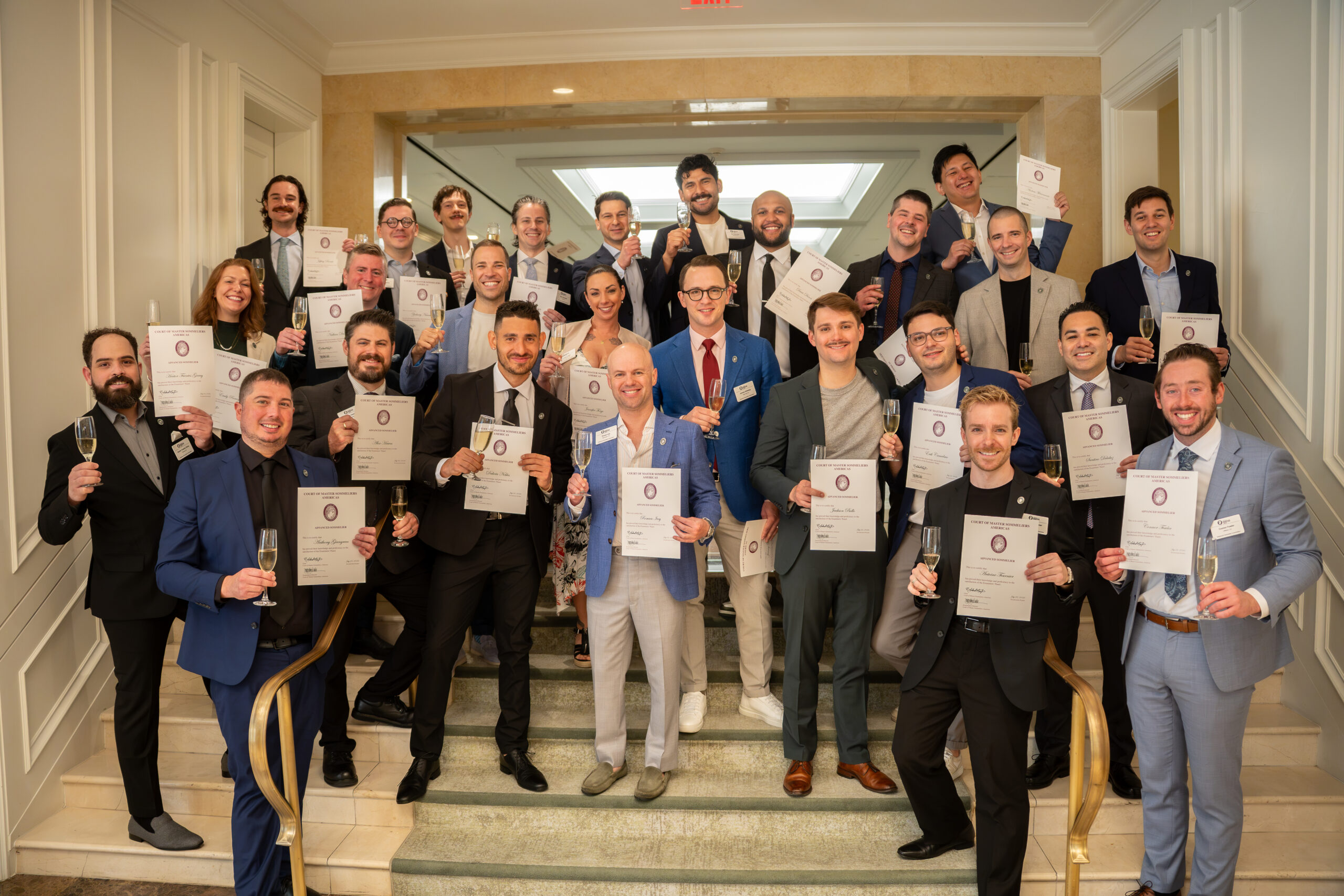
Completing the Introductory Sommelier Course gives you the grounding to confidently pursue the rest of the Court of Master Sommeliers’ four-level education program, working your way to the Master Sommelier Diploma, recognized across the hospitality industry as the leading professional standard for beverage service.

Comprehensive Curriculum Designed for Real-World Knowledge
Wine starts in the vineyard, not the bottle
All wine starts with the same basic process, but grape variety, climate, and winemaking decisions shape the final result in countless ways. Most people are surprised by how much of what they taste in a glass traces back to decisions made long before bottling. You’ll come away understanding why wines from different places and producers taste so different from one another, and what to look for when making your next selection.
The grapes and regions worth knowing
You’ll get to know the grape varieties that appear most often on wine lists and in wine shops, along with the wine regions where they’re grown and the styles they produce. Rather than trying to memorize everything at once, the course focuses on the varieties you’ll encounter most often, giving you a practical foundation you can build on over time.
Tasting is a method, not a talent
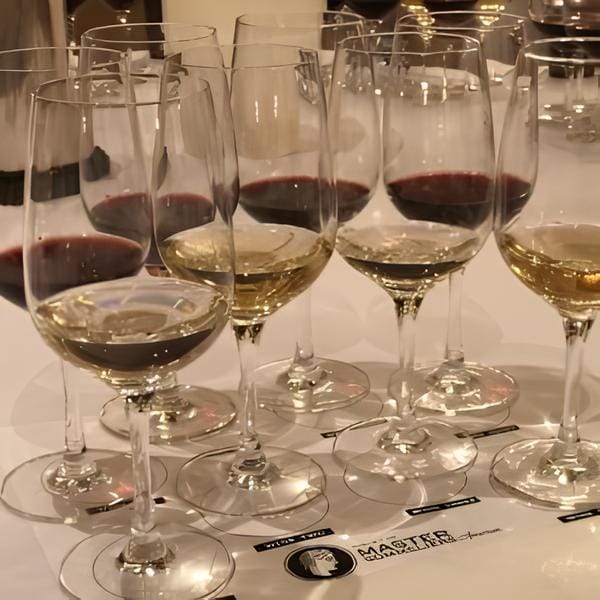
Wine tasting is not magic. It’s a method plus a lot of practice. The course teaches a structured, repeatable approach (Look, Smell, Taste) to observing and describing what’s in the glass, with the vocabulary to communicate it clearly. With the method in hand, every bottle becomes an opportunity to practice.
Pairing food and wine without the guesswork
Good pairing isn’t about memorizing a chart. You’ll learn how food and wine affect each other and why certain combinations work while others fall flat. Walk away with a decision-making process you can use at the table, whether you’re cooking at home or ordering at a restaurant.
What's on the label
A wine label holds more information than most people realize, and knowing how to read one changes the way you shop. You’ll learn to decode what’s on the bottle and use it to make more informed choices before you even open it.
Knowledge you can use right away
The course goes beyond theory. You’ll build the practical skills to feel confident in real-world settings, whether that’s a restaurant, a wine shop, or your own dinner table. The goal isn’t just to learn about wine but to change how you experience it.
Student Success Stories and Career Outcomes
Real Results from Real Students
- “Absolutely loved it. I’m sad to finish it. Every instructor was amazing at explaining and easy to understand.”
- “This was an incredible experience. I am not in the industry but after this I am inspired to learn more and continue my journey once I have had more time to study and practice my tasting techniques.”
- “Had a very interesting and enjoyable time learning about wine and the specifics of becoming a sommelier.”
- “Loved the personal schedule flexibility!”
- “I have completed the WSET level 3 certification as well, and I was surprised how much additional that I learned through this course. I very much enjoyed taking this course.”
- “Everyone was friendly, informative, and motivational. They took the fear out of learning wine!”
Industry Sponsors and Partners
Take Our Online
Wine Course
Today & Grow in Your Wine Knowledge
Frequently Asked Questions
The Introdoctory Sommelier Course is self-paced, with video instruction and interactive reinforcement modules you work through on your own schedule. Live components vary by program level. If you’re exploring higher-level examination courses, contact us for specifics on in-person and live requirements.
For the guided tasting modules, you can choose to source wines on your own or purchase the CMS Foundations in Wine Kit for six curated wines that align with the tasting modules in the course. If you source your own, the course includes a recommended wine list — six specific bottles covering key white and red varieties — so you know exactly what to look for, and most are widely available at wine retailers.
The course teaches you to observe and describe wine objectively using a repeatable method, the same close attention that blind tasting draws on. Once you’ve built your tasting vocabulary through the guided tastings, you’ll have what you need to try blind tasting on your own: covering the label and describing what you notice before you know what’s in the glass. It’s a great way to test what you’ve learned and see how far your palate has come.
The Foundations in Wine course is self-paced, so the timeline is yours to set. You’ll have 6 months of access after purchase, and most students move through the four modules over several weeks — though you can accelerate or take more time depending on how much you want to practice between lessons. Each module is designed around real student needs, so you come away with a solid, practical foundation in wine knowledge.
