
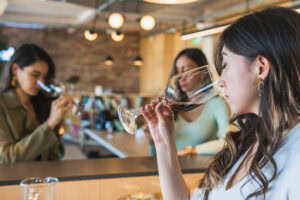
Have you ever taken a sip of wine and sensed there was more going on in the glass than you could describe? That’s not a matter of having a special palate. Wine tasting is a skill, built through practice, patience, and a systematic approach. Whether you’re a curious beginner, enthusiast looking to sharpen your skills, or a service professional, learning how to properly taste wine opens up a world of flavors, aromas, and sensory experiences you may not have noticed before.
This guide walks you through the fundamentals of tasting: from setting up your space and understanding the basic process, to developing techniques that will transform how you experience wine. You’ll learn how to assess wine visually, identify aromas, understand flavor profiles, and build a wine vocabulary that lets you talk about what you’re tasting with confidence.
The Fundamentals of Wine Tasting: Getting Started
Every glass of wine is telling you a story, and learning to taste is really learning to listen for it. Aromas in wine come from four sources: the grape variety itself, the climate where the grapes were grown, the winemaking choices made in the cellar, and from development in the bottle. Once you start recognizing each of these layers, everything else about tasting gets easier.
Tasting notes are worth starting from day one. They give you a personal record and sharpen your ability to identify and remember what you smell and taste, whether you’re tasting at a formal event or your own kitchen table.
Blind wine tasting, or evaluating a wine without seeing the label, is a particularly effective way to build skill. It strips away outside influence and forces you to focus entirely on what’s in the glass. Many experienced tasters do this regularly to stay sharp and honest about what they’re perceiving.
Essential Wine Tasting Equipment and Setup
Before any of that can happen, though, the right setup makes a real difference in what you’re able to perceive. You don’t need much to get started: clean, clear glasses, water, a dump cup, a neutral snack if you need one, and good lighting cover the basics. A white background helps when you’re assessing color.
If you’re tasting more than one wine, use glasses of the same size and shape so you can compare consistently. Chill white wines before tasting and serve reds slightly cooler than room temperature. These small choices keep your sensory environment consistent, which makes it easier to read between the wines.
Understanding the Basic Wine Tasting Process: Look, Smell, Taste
With your setup ready, you’re prepared to work through the tasting process itself, which unfolds in three steps: Look, Smell, and Taste. Understanding what to look for at each stage helps you evaluate wine more clearly and build a more reliable sense of what you like and why.
Look: Check the wine’s color, clarity, and legs, meaning the way it drips down the inside of the glass after swirling. Legs can hint at alcohol level and sometimes sugar, but they’re not a sign of quality. Legs measure the viscosity of a wine and can tell you more about the ripeness and alcohol level of the wine.
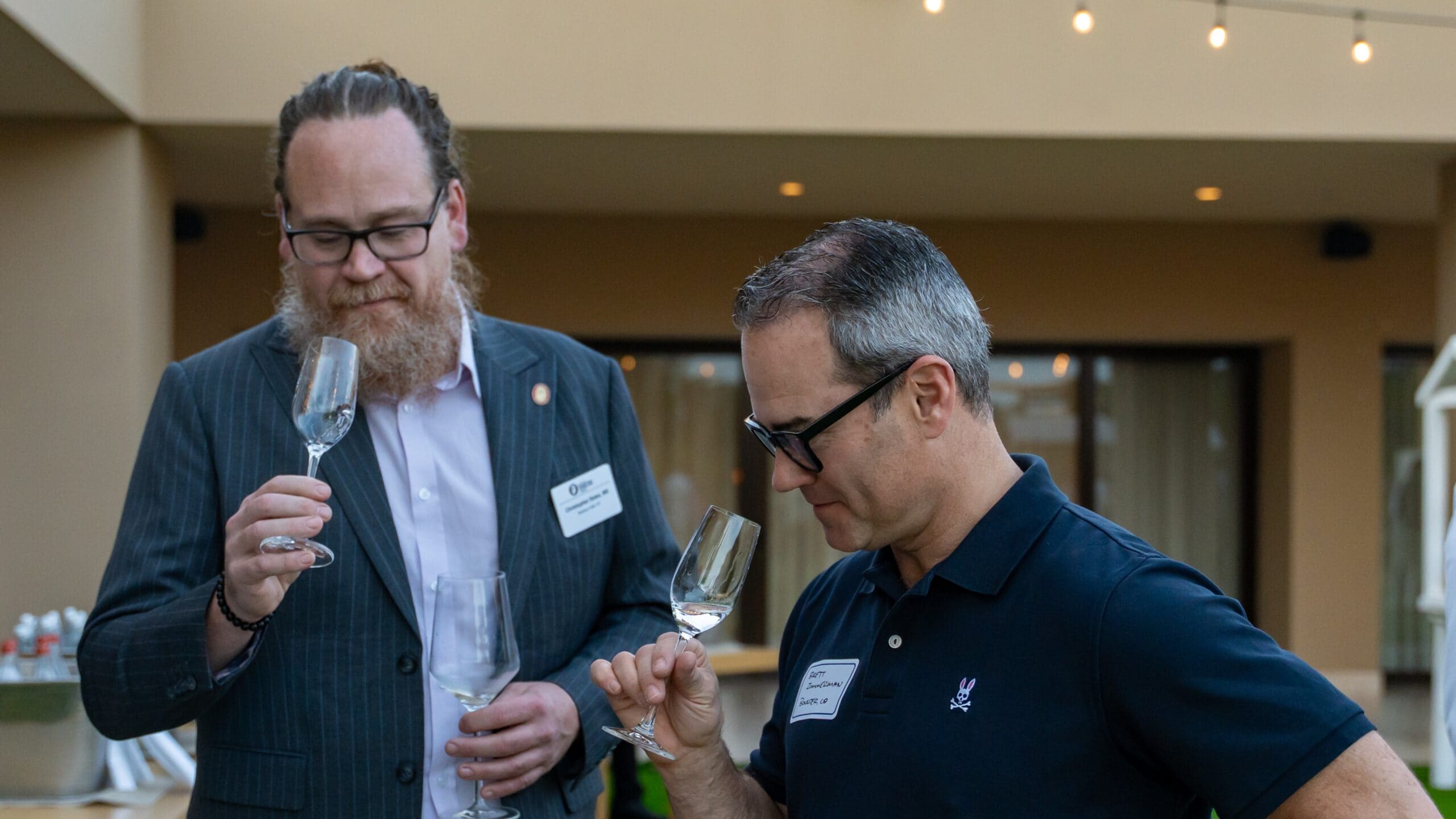
Smell: Swirl the glass first to release the aromas, then see what you find. Start broad: is it fruit, or something else? Then get more specific, working through fruit, non-fruit (flowers, herbs, spices, vegetables), and new oak, if there is any (vanilla, baking spice, toast, smoke). This takes practice, and that’s completely normal.
Taste: Finally, taste with intention. Apply the same simple method every time; that consistency is what builds real skill.
Creating the Right Environment for Wine Tasting
The steps matter, but so does the room you’re tasting in. Bright lighting helps you assess the wine’s color and clarity, and a neutral-colored background makes it easier to judge that color accurately, which matters even more with lighter-colored reds like Pinot Noir.
Keep noise to a minimum so you can concentrate, and avoid wearing strong perfume or having pungent foods nearby. These can overshadow the delicate fruit and non-fruit aromas you’re working to identify, especially in wines where those characteristics are more subtle.
Tasting in a group can be a valuable learning experience. Hearing how others describe the same wine exposes you to different vocabulary and perspectives, and comparing notes helps you notice things you might have missed on your own.
Developing Your Wine Palate Through Systematic Tasting
With the right setup and environment in place, you’re ready to slow down and taste with real intention.
The Look: Visual Assessment of Wine
Begin evaluating a wine with its appearance. Hold the glass by the stem so your hand doesn’t warm the wine, then tilt it away from you at about a 45-degree angle over a white background, like a piece of paper, a white napkin, or a white tablecloth. This helps you see the wine’s true color without any distortion.
Notice the color and how deep or pale it is. Color can hint at age, grape variety, growing climate, and production techniques used. Younger red wines often show brighter, more vivid color; as red wine ages, the color tends to shift from deep purple toward garnet and eventually brick at the rim. Similarly, as white wine ages, it gets darker in color as well.
The way wine clings to the glass after swirling, sometimes called “legs” or “tears,” can offer a general indication of alcohol level and sometimes sugar. They’re not a sign of quality, and they’re not a reliable read on tannin, so it’s worth not reading too much into them. Legs are a minor detail compared to what you’ll learn from smell and taste.
The Smell: Identifying Aromas and Bouquets
Once you’ve looked at the wine, smell is where most of the real work happens. Get your nose into the glass and take note of what you find. Aromas come from the grape variety, where the grapes were grown, and how the wine was made. As you build your own reference library, you’ll start noticing how each of these shows up in the glass.
Swirl the glass to release those aromas before you smell. Start broad: is it fruity? Earthy? Floral? Then get more specific. If you notice that your mouth waters when you smell the wine, that’s a sign of vibrant acidity in the wine. The more you practice, the more your brain builds a reference library to draw from, and the faster you’ll be able to identify what’s in the glass.
The Court of Master Sommeliers teaches that wine tasting is a learned skill, not a natural talent. Building your aroma recognition is really just a matter of paying closer attention: in the kitchen, at the market, anywhere you encounter an interesting smell.
The Taste: Understanding Flavor Profiles and Structure
After smelling, it’s time to taste. Take a small sip and let the wine reach every part of your mouth before you evaluate it. The first sip wakes up your palate. The second is when you really taste with intention.
Pay attention to both flavor and structure. Flavor is what the wine tastes like: fruit character, earth, spice, herbs. Structure is how it feels: sweetness, acidity, tannin, alcohol, and body. Red wines often carry more pronounced tannin, which creates that drying sensation on your cheeks and gums, and the balance between acidity, sweetness, and alcohol shapes the overall impression a wine leaves behind.
Practice sharpens all of this. Every bottle you open is a chance to apply the same method and notice something new. Consistency is key to finding success with wine analysis.
Looking to Learn Everything There Is to Wine?
Advanced Techniques to Enhance Your Wine Appreciation Skills
Once the basics feel natural, developing a more sophisticated palate comes down to deliberate, structured practice. Blind wine tasting is one of the most effective tools available. Tasting without seeing the label removes preconceptions and forces you to rely entirely on your senses. It’s also just a fun way to test how far your palate has come; try covering the label and guessing the style before you look.
Our online wine courses at the Court of Master Sommeliers are built around this same principle: a clear, repeatable method applied with intention. Every lesson comes directly from a Master Sommelier, one of approximately 300 people who have passed the most demanding beverage examination in the world. The skills you build translate directly to real-world settings, whether you’re working in a restaurant, running a wine shop, or hosting at home.
Comparative Tasting Methods and Wine Flights
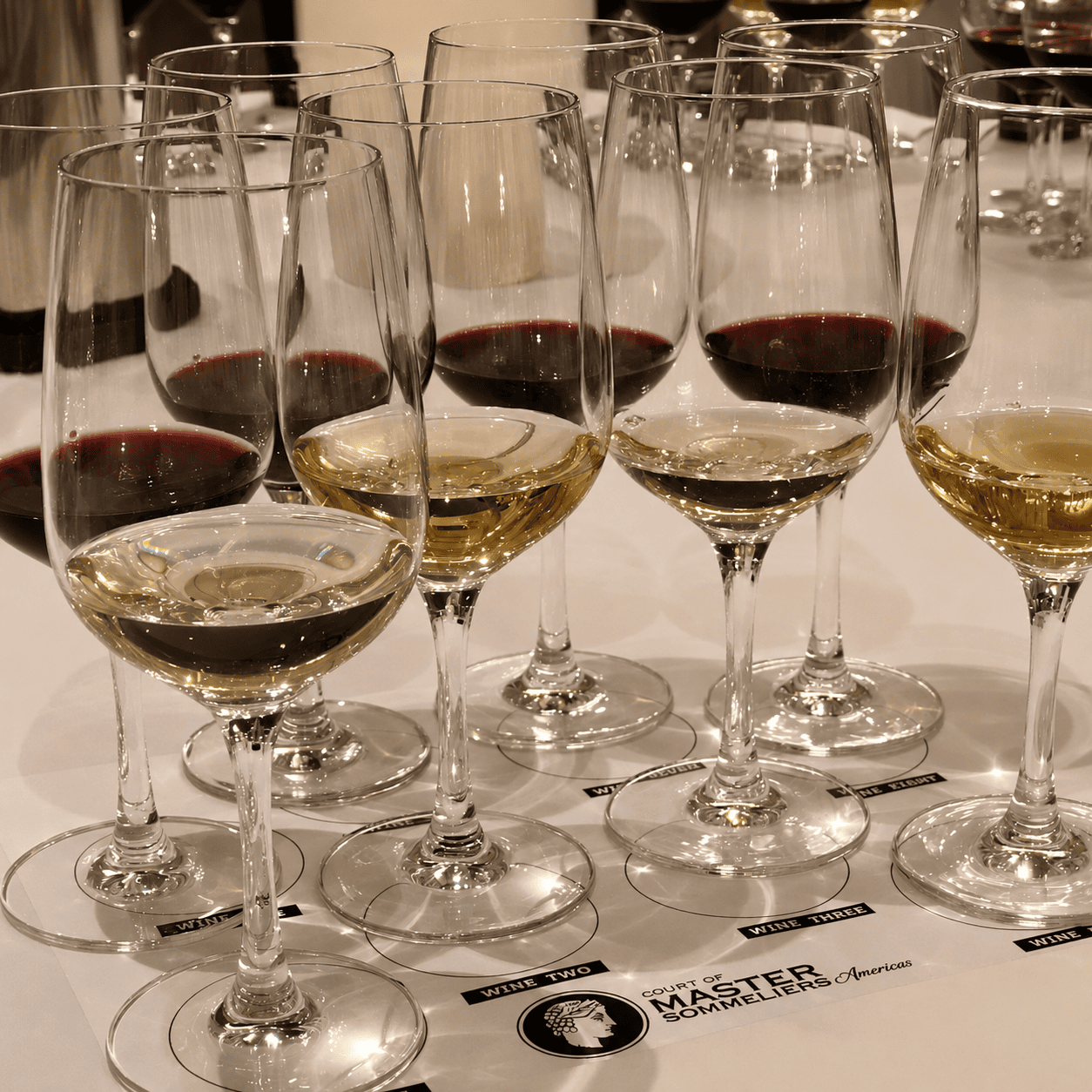
Once you’re comfortable tasting blind, the next step is tasting side by side. Comparative tasting and wine flights are methods that allow you to compare similar wines side-by-side, which makes subtle differences far easier to spot. Try tasting wines from two different regions side by side (Pinot Noir from California versus Burgundy, for example) and you’ll notice differences in fruit character, tannin level, acidity, and body that are much harder to catch when you’re tasting a wine on its own.
Wine flights, typically a lineup of several wines, are a great way to experience a range of styles at once. As you taste, jot down the primary aromas, key flavors, and structural elements of each wine. Building these comparisons over time speeds up your ability to recognize patterns across grape varieties, regions, and winemaking styles.
Building Your Wine Vocabulary and Tasting Notes
The more you compare wines, the more you’ll need the words to describe what you’re finding. Expanding your wine vocabulary gives you precision when describing what you experience. The course organizes this into three simple categories: fruit (what kind of fruit do you notice, and is it tart, ripe, or jammy?), non-fruit (flowers, herbs, spices, vegetables), and new oak, if present (vanilla, baking spice, toast, or smoke). Starting broad and then getting specific within these categories is what builds precision over time.
Good tasting notes are more than a list of descriptors. They should capture the essence of the wine. Note the fruit character, tannin level, and alcohol impression, and give each component its own space: dryness, acidity, aroma. Over time, these notes become a valuable archive you can revisit when practicing blind tasting or comparing wines from different regions.
As your vocabulary grows, you’ll find that your experience of wine becomes richer and more specific. Language and perception reinforce each other: the more precisely you can describe something, the more clearly you tend to notice it in the first place.
Common Wine Tasting Terms
During wine tastings, familiarizing yourself with common terminology is key. These terms are the building blocks of tasting notes and are used to discuss wines intelligently. Here are some essential words that every wine lover should know:
- Acidity: The fresh, tart quality in wine that makes your mouth water. Higher acid wines feel lively and bright; lower acid wines feel softer and rounder.
- Tannin: A structural element derived mainly from grape skins, tannin creates a drying sensation inside your mouth. Most prominent in red wine and wines with oak treatment.
- Body: The weight or fullness of the wine in your mouth, ranging from light to medium to full. A wine’s body is shaped primarily by alcohol content or sugar weight. Higher alcohol wines have more body and weight than wines lower in alcohol.
- Finish: The impression a wine leaves after you swallow or spit. Length of finish, how long the flavors and sensations linger, is one indicator of a wine’s overall complexity and quality.
Practice using these terms during every tasting, whether alone or with others. The goal isn’t to sound technical; it’s to communicate clearly about what you’re experiencing. That clarity is what separates a developing palate from a confident one.
