
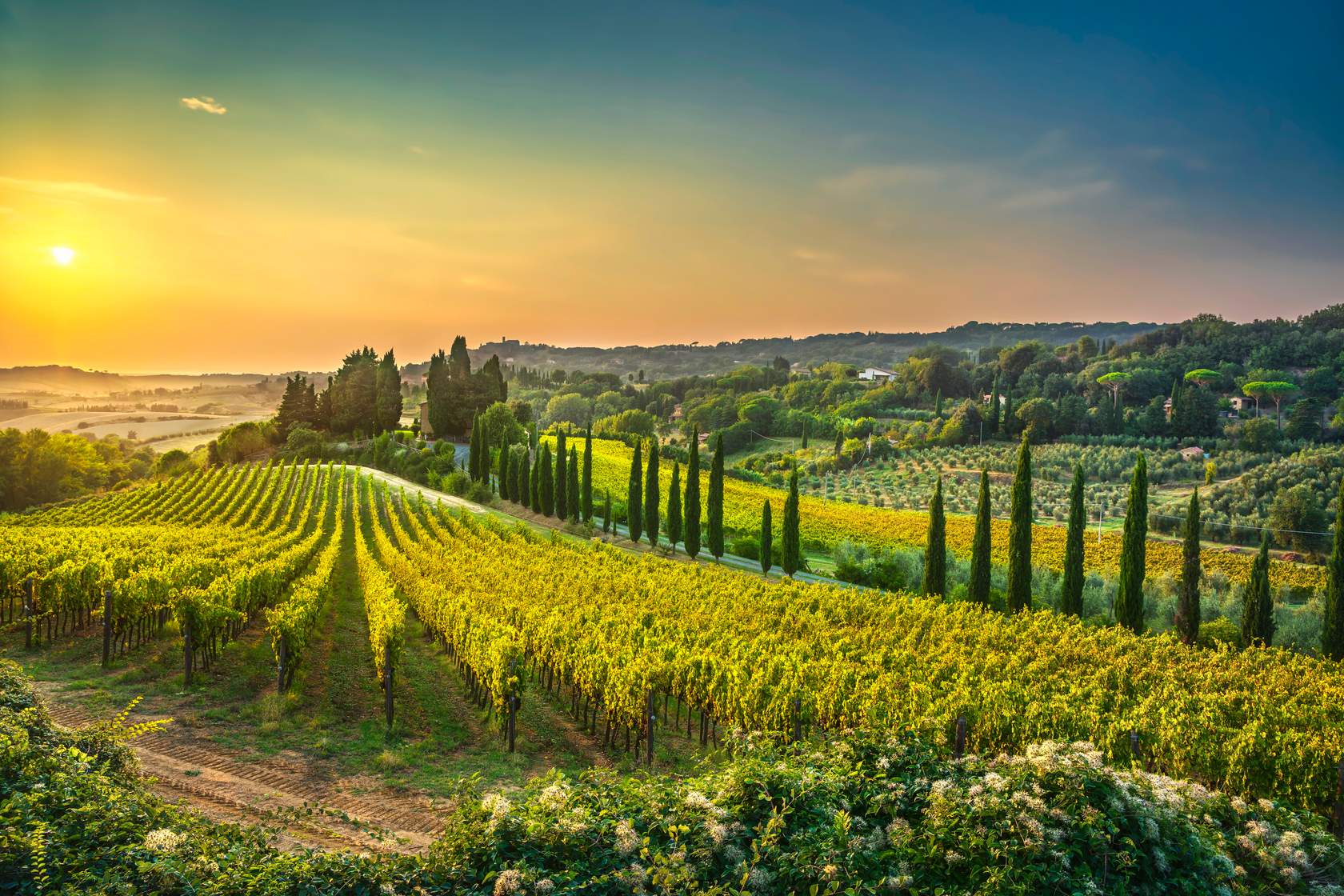
Long before the cork comes out of the bottle, every glass of wine starts as a cluster of grapes ripening on a vine. At its simplest, wine is made when yeast turns the natural sugar in grape juice into alcohol. The path from vineyard to bottle follows a set process: harvest, crushing, pressing, fermentation, aging, and bottling.
Wineries follow the same basic steps, and the small choices made at each stage are what set one wine apart. They explain why a crisp Sauvignon Blanc and a bold Cabernet Sauvignon taste worlds apart. Here’s how each stage shapes what ends up in your glass. It’s the same process Master Sommeliers study and explain to students around the world.
Table of Contents
Great Wine Starts in the Vineyard
Much of what you taste is decided before the grapes reach the winery, shaped by the grape variety, where it grows, and that year’s weather. Most of the world’s classic wine grapes belong to one species, Vitis vinifera. Its many varieties, from Chardonnay to Cabernet Sauvignon, each have their own typical flavors and structure.
Compared with table grapes, wine grapes are typically smaller, seeded, and higher in sugar, with more skin relative to juice. Each part of the grape brings something different to the finished wine:
- Skin: Gives red wine its color, along with flavor and tannin, which creates a drying feeling in your mouth.
- Pulp: Holds the water, sugar, and natural acids. The sugar becomes alcohol, while the acids keep wine tasting fresh.
- Seeds: Contain bitter oils, so winemakers take care not to crush them.
Most major wine regions sit roughly between 30° and 50° latitude, where grapes can ripen fully while holding on to their acidity. Once the fruit reaches that balance, the work moves from the vineyard to the winery.
The Winemaking Process, Step by Step
Most wines follow a similar path, though the details shift by region and style:
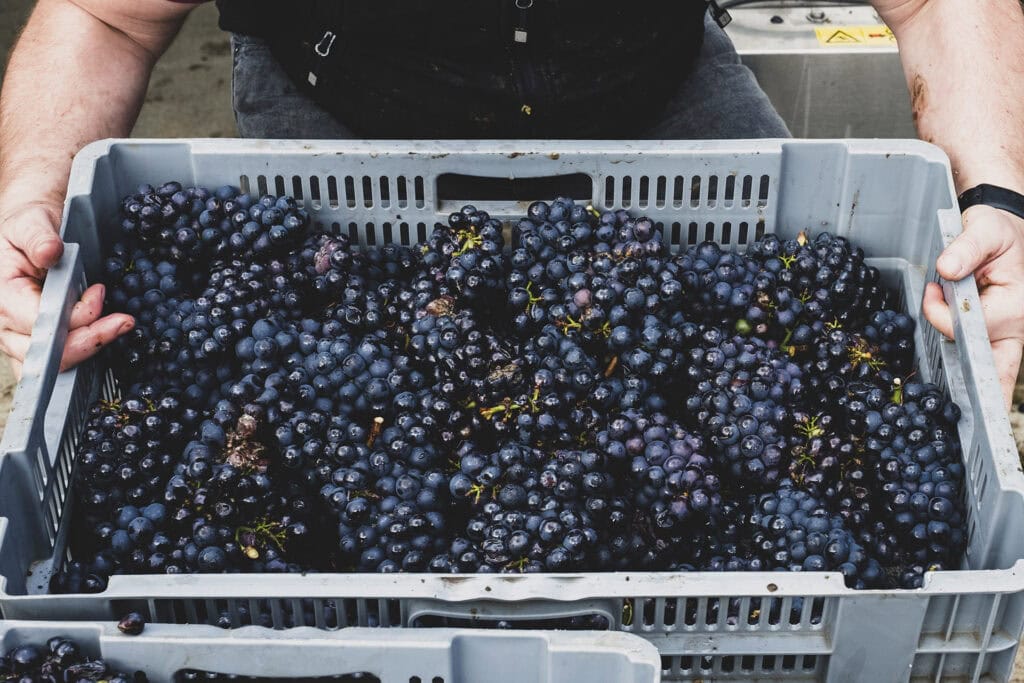
1. Harvest: Picking at the Right Moment
Timing the harvest is one of the most important calls a grower makes. Grapes are picked when their sugar, acidity, and flavor reach the balance the winemaker wants.
2. Crushing and Destemming
At the winery, grapes are usually separated from their stems and gently broken open to release their juice. Winemakers avoid cracking the seeds, which would add bitterness.
3. Pressing: Where White and Red Wine Part Ways
Pressing separates the juice from the skins, and its timing is the clearest difference between how white wines and red wines are made, since almost all of a wine’s color comes from the skins.
For white wines, grapes are pressed before fermentation, so the juice picks up little color or tannin. For red wines, grapes are pressed after fermentation, and the juice picks up color and tannin from the grape skins.
4. Fermentation: Where Grape Juice Becomes Wine
Fermentation starts with yeast, a tiny living organism found naturally on grapes and in wineries. The yeast feeds on the sugar in the juice and converts it into alcohol. The basic equation looks like this:
Sugar + Yeast = Alcohol + Carbon Dioxide + Heat
During fermentation, the juice bubbles as carbon dioxide escapes. In red wines, the skins float to the top, so winemakers regularly mix them back in to draw out color and flavor. Once the yeast has turned most or all of the sugar into alcohol, fermentation is complete.
5. Aging in Stainless Steel or Oak
Where young wine rests makes a noticeable difference. Stainless steel tanks are neutral and add no flavor, keeping the wine fresh and true to the grape, which suits many white wines. Oak barrels can add aromas of vanilla and baking spice and give the wine a richer, rounder texture.
Many winemakers also use malolactic fermentation, a natural process that changes sharper acids into softer ones. It can make a wine feel creamier and add buttery notes, a hallmark of many rich Chardonnays.
6. Clarifying, Blending, and Bottling
Before bottling, winemakers may blend wines from different grapes, barrels, or vineyard sites to build the final flavor. Many wines are also fined or filtered to remove tiny particles, so they look clear in the glass. Small amounts of sulfites are often added to protect freshness.
Finally, the wine is bottled and sealed with a cork or screw cap. Corks are traditional and often used for wines meant to age, while screw caps keep fresh, fruity wines bright. The closure a winemaker chooses also affects how to open a bottle of wine once it reaches your table.
How Winemakers Create Different Styles of Wine
Winemakers can steer the process toward many different styles:
- Red wine ferments with the grape skins. The longer the skins stay in the juice, the deeper the color and the firmer the tannin.
- White wine is usually made from green-skinned grapes, with the juice separated from the skins right away. Since the color lives in the skins, white wine can even be made from red grapes.
- Rosé comes from red grapes that spend a short time with their skins before pressing, which gives the wine its pink color.
- Sparkling wine gets its bubbles from a second fermentation in a sealed container, which traps the carbon dioxide inside. Champagne, Cava, and Prosecco are all well-known examples.
- Sweet wine keeps some of the grape’s natural sugar. Winemakers may stop fermentation early or use grapes that were harvested late, dried, or frozen, as with Sauternes and Icewine.
- Fortified wine, such as Port and Sherry, has grape spirit added to raise the alcohol content. When the spirit goes in during fermentation, some natural sweetness stays in the wine.
Each style has its own ideal temperature and glassware, from chilled white wines to full-bodied reds, so knowing how a wine was made can make serving wine at home much easier.
How Winemaking Shows Up in Your Glass
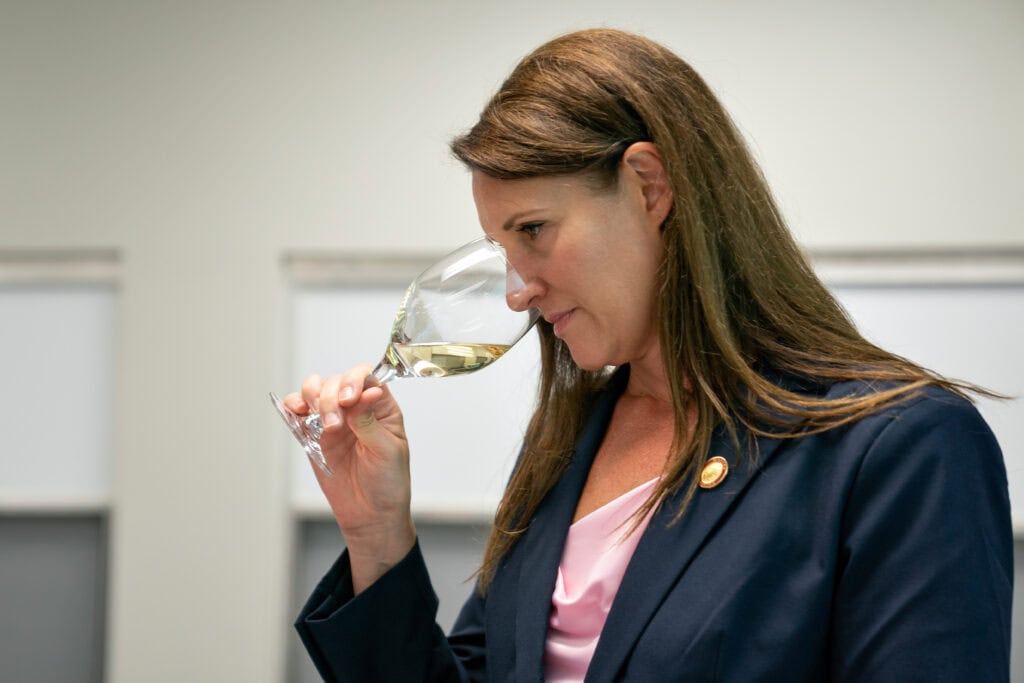
Once you know how wine is made, you’ll start noticing winemaking choices with every sip. Notes of vanilla, toast, or baking spice often point to time in new oak barrels. Aromas of butter or cream suggest malolactic fermentation. A drying grip on your gums comes from skin or wood tannin.
Grape variety, climate, and winemaking work together to shape every wine. Learning how to taste wine with a repeatable method makes those clues easier to spot and is the first step toward describing wine with confidence. Our Wine 101 series, starting with everything you need to know about wine, covers grapes, regions, and styles in more depth.
Bring Your Wine Knowledge From the Vineyard to the Table
Tasting wine with a Master Sommelier shows you how each winemaking choice appears in the glass. The Foundations in Wine course is taught by Master Sommeliers, the top beverage professionals in the world. Students learn how grapes become wine, how to taste and pair wine with food, and how to put that knowledge to use in real life.
The course is fully online and self-paced, with six months of access after purchase, and suits anyone curious about what’s in their glass.
Frequently Asked Questions
It depends on the style. Many fresh white wines and rosés are bottled within a few months of harvest to keep their bright, fruity character. Many red wines spend a year or more aging in barrels or tanks before release, and some rest for years in the bottle. Depending on the law or style of wine, some wines benefit from this aging before release.
Most wines contain no added flavorings. Aromas like vanilla, toast, and butter come from oak barrels and techniques such as malolactic fermentation. Some cooler regions allow one type of addition, called chaptalization. In places such as Burgundy, local wine laws permit winemakers to add sugar before fermentation when grapes don’t fully ripen. Those laws limit how much the alcohol can be increased, and many warmer regions, including California, prohibit the practice but allow the addition of water or acidity to help balance ripe wines.
Sulfites form naturally during fermentation, and winemakers often add small amounts to slow oxidation and keep unwanted bacteria from spoiling the wine.
