
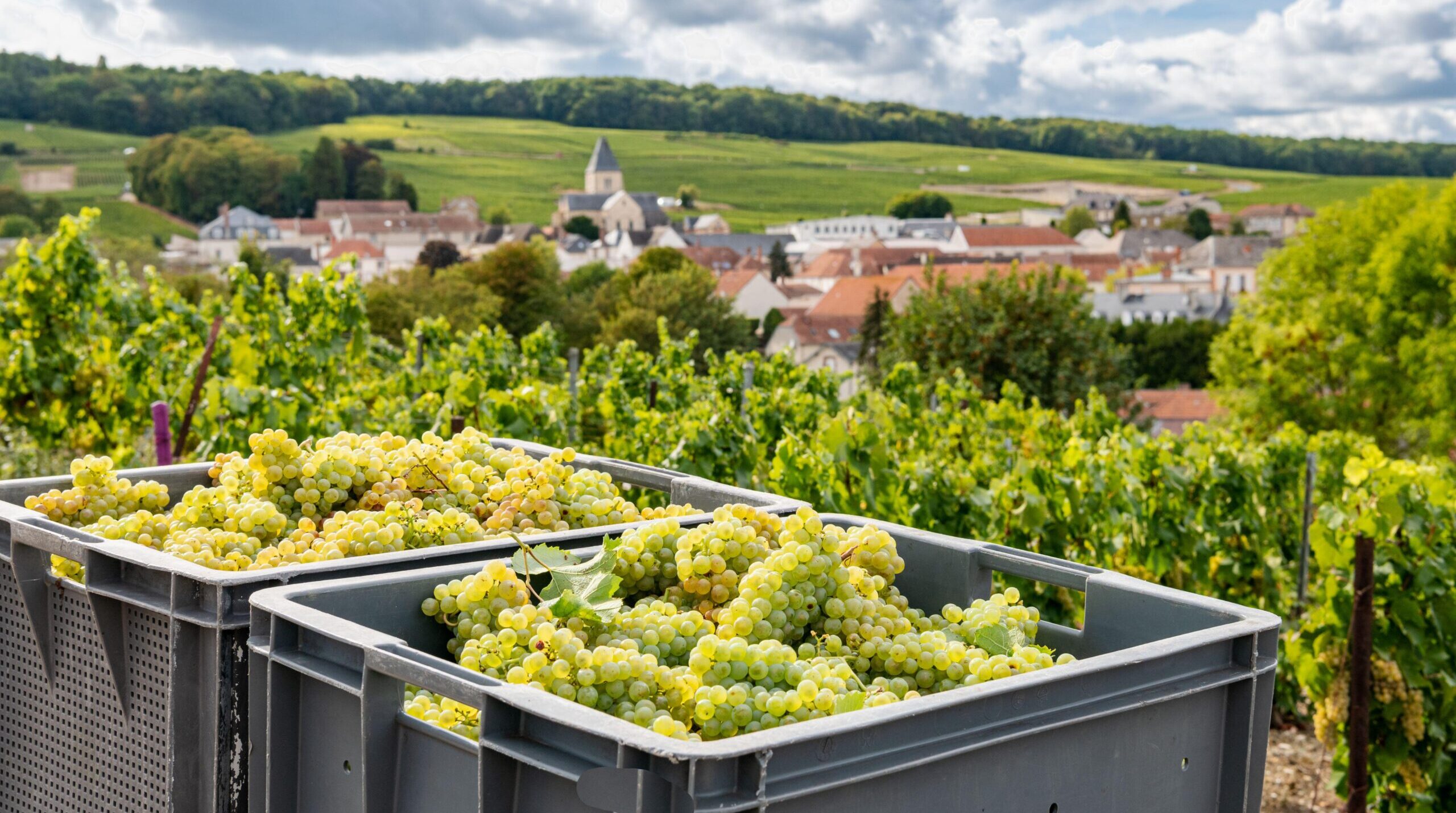
Wine has been part of human celebration, ritual, and daily life for thousands of years, yet most people never learn a reliable way to taste it, talk about it, or choose it with confidence. We can teach you those skills. At the Court of Master Sommeliers, we train and certify the sommeliers who set the standard for wine service worldwide. This guide will teach you the fundamentals every wine lover should know: how wine is made, how to taste it with purpose, how to read a label, and how to pair it with food.
Table of Contents
What Wine Is and How It's Made
Every wine starts the same way. Grapes are harvested and crushed, and their juice ferments as yeast converts the natural sugars into alcohol and carbon dioxide. From there, no two wines are alike.
The grape variety, the climate where it’s grown, the decisions made in the vineyard, and the choices made in the cellar all shape what ends up in your glass. Age a wine in oak, and it picks up notes of vanilla and baking spice. Age it in stainless steel instead, and the grape’s fresh, fruit-forward character stays front and center. Color, aroma, flavor, and texture can all be traced back to these choices.
A structured wine education builds the tasting skills, label literacy, and background knowledge that turn casual curiosity into real confidence. That confidence starts with the bottle itself, and the glass you pour it into.
Understanding Your Wine Bottle and Glass
A wine label carries more information than it looks like at first glance: the producer, the country and region of origin, sometimes the grape variety or blend, and the vintage year. Some wines lead with the grape name, like Cabernet Sauvignon or Sauvignon Blanc. Others lead with a place name, like Burgundy or Champagne, where that appellation determines the grape and the style through production rules.
The glass you pour into can affect what you taste, because it controls how the aromas reach your nose. The quality of the glass can also enhance the enjoyment experience of drinking wine. A glass has three parts: the bowl, the foot, and the stem that connects them. A wider bowl gives red wines room to breathe and release their aromas. A narrower rim concentrates the aromas of white and sparkling wines toward the top of the glass, right where your nose meets them first. The shape even affects how the wine lands on your palate, changing where it hits your tongue and how it feels in your mouth. Holding the glass by the stem, not the bowl, so your body heat doesn’t warm the wine before you taste it, is one of the small habits that adds up to serving wine well.
Once you know what’s in the glass and how to hold it, the next step is finding the words for what you’re noticing. Describing wine is about putting language to what your palate is already picking up.
Wine Terminology
A handful of terms cover most of what you need to talk about wine like a professional. Once you know them, they’ll click into place every time you taste.
- Tannin: The drying, grippy sensation in red wines, similar to oversteeped black tea.
- Acidity: The mouthwatering, fresh feeling on the sides of your tongue.
- Body: The weight of the wine in your mouth, from light like water to full like cream.
- Dry: No perceptible residual sugar remaining after fermentation.
- Finish: How long the flavors linger on your palate after you swallow.
- Vintage: The year the grapes were harvested.
With that vocabulary in hand, you’re ready to see how it plays out differently across red and white wines.
Red Wine
Red wine gets its color, tannin, and fruit character from one decision: how long the juice stays in contact with the grape skins. The longer that contact lasts, the deeper the color and firmer the tannin.
Cabernet Sauvignon is a full-bodied red grape with blackberry and black currant flavors, most associated with Bordeaux, France, and Napa Valley, California.
Pinot Noir is lighter in color and lower in tannin, often showing black cherry, red plum, cola, and tea character. Its historic home is Burgundy, France, with Oregon and California as standout producers today.
Merlot offers softer tannins with black plum, red cherry, cocoa, and coffee notes. It is produced widely across Bordeaux, France, and California, making it a natural starting point for new tasters.
Once you’ve spent some time with the reds, white wine shows you the other side of that same decision.
White Wine
White wines skip that skin contact almost entirely, which is why so little color or tannin makes it into the glass.
Chardonnay’s style depends almost entirely on winemaking: unoaked versions come out lean and mineral, while barrel-aged Chardonnay turns round and creamy. It’s grown widely across Burgundy, France, and California.
Sauvignon Blanc is high in acidity with citrus and herbal character, with notable production in the Loire Valley, France, and Marlborough, New Zealand.
Pinot Grigio is the Italian name and Pinot Gris the French name for the same grape. Northern Italy produces a light, crisp style while Alsace, France, and Oregon produce a fuller, more textured one.
Riesling spans bone-dry to sweet, with high natural acidity and stone fruit aromas. Germany, Austria, and Alsace, France, are its most celebrated production regions.
Red and white cover most of what’s on a wine list, but rosé, sparkling, and sweet wines round out the picture.
Rosé, Sparkling, and Sweet Wines
Rosé is made from red grapes given only a brief period of skin contact, just enough to lend the wine its pink color. Sparkling wines start as still wines, then undergo a second fermentation in a sealed container that traps carbon dioxide, which is released and creates the bubbles.
Champagne from France, Prosecco from Italy, and Cava from Spain are protected appellations, each with its own production rules. Sweet wines, often marketed as dessert wines, get their sweetness because fermentation stops before all of the grape’s natural sugar converts to alcohol, as with Sauternes from France and Icewine from Canada.
Knowing the wine is only half the picture. Tasting it with a method is what turns that knowledge into a skill you can use.
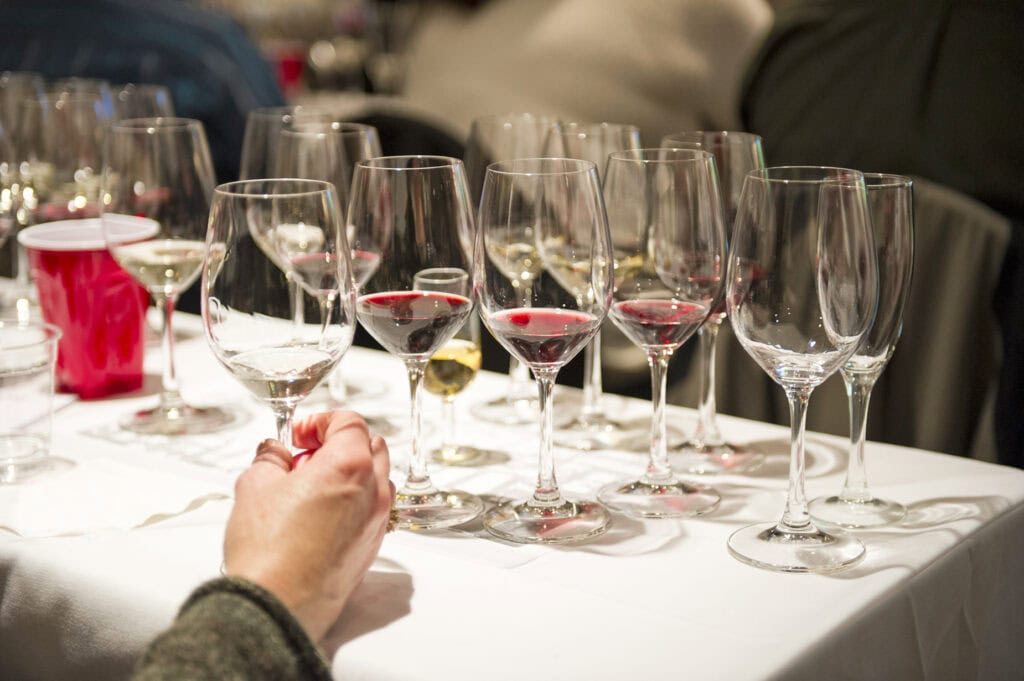
Tasting Wine With Purpose: Look, Smell, Taste
Wine tasting isn’t a talent some people are born with. It’s a method, plus practice, and it’s the same method Master Sommeliers use at the tasting table and teach to every new student. It comes down to three steps, each building on the last:
- Look: Tilt the glass away from you, downward, over a white background and check the wine’s color and how deep it is.
- Smell: Swirl the glass to release the aromas, then bring it to your nose for a few short sniffs. Take your time here. Smell makes up most of what you’ll register as flavor once you taste.
- Taste: Take a small sip and swish it around your whole mouth. Notice the sweetness, acidity, tannin, alcohol, and body, then pay attention to how long the flavors linger after you swallow.
Reading Wine Labels
Once you’ve tasted with intention, the label in front of you starts to make a lot more sense.
A wine label gives you the producer, country and region of origin, grape variety (if listed), and vintage year. If a grape name appears, that grape makes up the bulk of what’s in the bottle, as with Cabernet Sauvignon or Pinot Grigio.
Place-named wines, like Burgundy or Champagne, carry the grape and production rules established within the appellation itself. Those place names are legally protected, so Champagne can only come from Champagne and Prosecco only from its defined region in northeastern Italy.
Now that you can read the bottle, the next question is what to put next to it on the table.
Food and Wine Pairing
Salt in food softens the perception of acidity. Fat tames tannin. Sweetness in food can make a dry wine taste more bitter by comparison. None of this is a rule to memorize. It’s a reaction happening in real time in the glass and on your palate. Complementary pairings match similar qualities in the food and wine: think a rich Chardonnay with creamy pasta, or sparkling wine next to something salty, where the acidity and carbonation brighten the dish.
A high-acid white wine cuts through fried dishes, and tannic red wines like Cabernet Sauvignon pair well with the fat in grilled meats. High-alcohol wines intensify the heat of spicy dishes. As a general starting point, match the weight of the wine to the weight of the dish.
Once the food and wine are chosen, how you pour and serve them can still impact the meal.
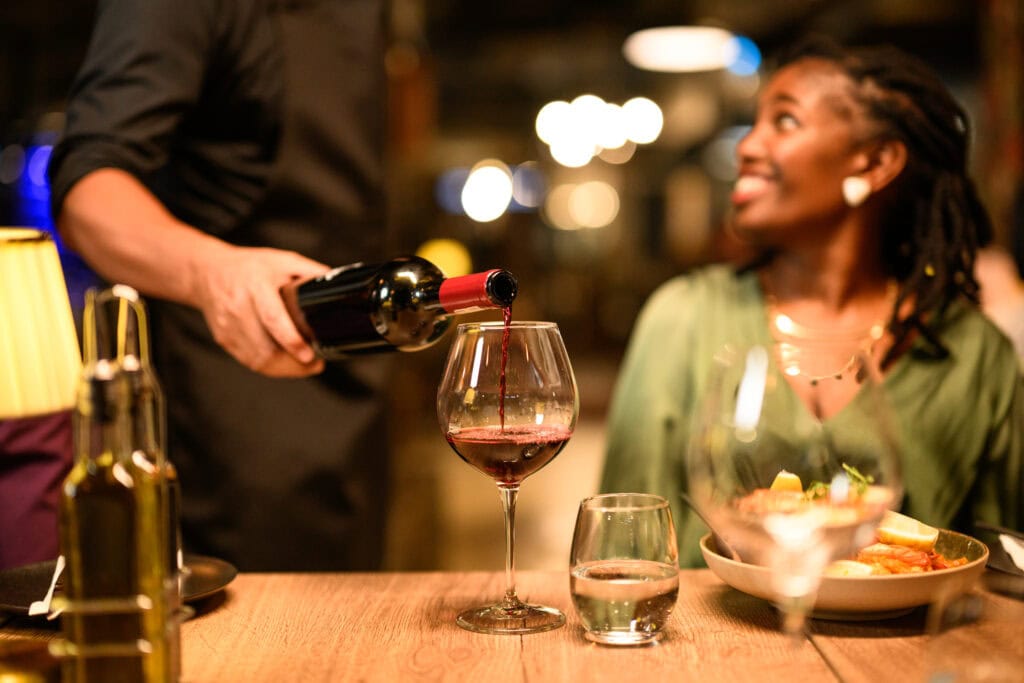
Pouring and Serving Wine
Temperature changes how a wine tastes as much as anything on the label. Red wines served too warm taste hot because the alcohol vapors become the dominant thing you smell. White and sparkling wines are served cold, with sparkling wines especially sensitive to heat, since warmth speeds up the loss of carbonation. Serve anything too cold, though, and the flavors are muted.
Pour red wine to about one-third of the glass, leaving room to swirl. The glass also impacts where the wine is placed on your palate when you take a sip. A little attention to temperature and pour is often the difference between a good glass of wine and a great one.
Start Learning Everything You Need to Know About Wine With the Court of Master Sommeliers, Americas
This overview covers the fundamentals, but wine rewards a lifetime of curiosity, and there’s always another region, vintage, or pairing worth exploring. The Court of Master Sommeliers is one of the most prestigious wine credentialing organizations in the world. Only 176 people have passed the Master Sommelier Diploma Examination, and every course is taught exclusively by Master Sommeliers. Explore our wine education courses and find the one that fits where you are.
Frequently Asked Questions
A dry wine simply has no perceptible sugar remaining after fermentation. A wine can smell like ripe fruit and still be completely dry, because fruitiness comes from aroma, not sweetness on the palate. You might also hear a dry wine described as lean or light, since it isn’t carrying the extra weight that sugar adds.
It comes down to using the same method every time you pick up a glass. Look at the wine’s color, smell it after a swirl, and pay attention to acidity, tannin, body, and finish as you taste. Do that consistently, and the skill, confidence, and knowledge build together.
Food and wine genuinely change how each other taste, and those interactions follow patterns you can learn to recognize. Salt softens acidity, fat tames tannin, and matching sweetness levels keeps the dish and the wine from tasting flat or bitter.
