
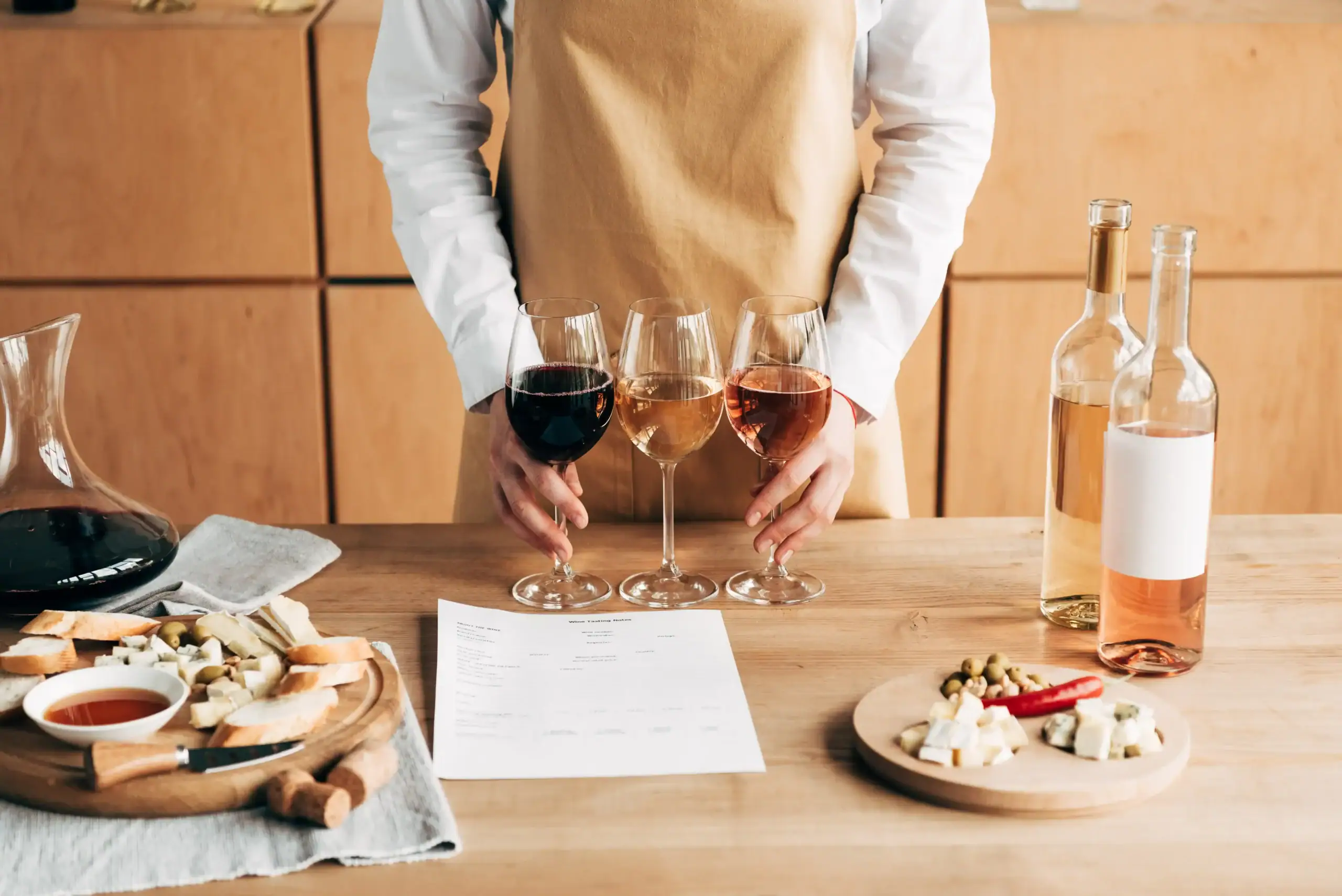
Why does how you serve a wine matter as much as the wine itself? Because even the best bottle can fall flat if it’s not given the chance to show what it’s capable of. Temperature, glassware, portion size, and aeration determine how a wine expresses itself once it’s out of the bottle. Handled correctly, they can enhance the wine’s aroma, texture, and flavor from the moment the cork is pulled, turning a good bottle into a genuinely memorable one. Here’s what makes the difference, one detail at a time.
Table of Contents
- Red Wine, White Wine, and Serving Temperature
- Glass Shapes and What They Do to Wine
- Decanting Red Wines for Aeration
- Wine Etiquette at the Table
- Food and Wine Pairing at the Table
- Common Wine Serving Mistakes at Home
Reds, Whites, and Serving Temperature
Temperature has a bigger impact on a glass of wine than most people realize. Serve a wine too cold or too warm, and you can lose much of what makes it enjoyable before it even reaches your nose and palate. Cold temperatures mute aromas and make a wine feel tighter and more astringent; warmth brings the alcohol forward and makes the wine taste flatter and less lively.
White wine is best served between 45-55°F/7-12°C. A crisp Sauvignon Blanc sits at the cooler end of that range, where higher acidity stays bright, and aromatics stay sharp. A barrel-fermented Chardonnay can be served closer to 55°F/12°C, where its fuller texture and oak-derived flavor become more apparent.
Full-bodied red wines like Cabernet Sauvignon are best served between 60-65°F/15-18°C; above that, alcohol dominates the palate, tannin becomes more assertive, and fruit character fades. Lighter reds like Pinot Noir are best between 55-60°F/12-15°C degrees, where lower tannin and bright fruit remain the focus. Most home environments sit warmer than 65°F/18°C, which means active chilling is part of serving wine correctly.
Serving wine correctly is one part of everything you need to know about wine.

Glass Shapes and What They Do to Wine
Even at the right temperature, the glass in your hand still decides how much of that aroma reaches you; different glass sizes and shapes can change how the same wine tastes. The bowl of a wine glass dictates how aroma compounds accumulate and release before the wine reaches the nose. Size and shape are not stylistic choices; they change what you smell and, by extension, what you taste.
- Wide Bowl: Increases surface area and accelerates aromatic release, which is why full-bodied red wines with complex aroma profiles are served in larger glasses.
- Narrow Bowl: Slows aromatic release and directs aroma upward in a concentrated stream, keeping delicate white wine aromatics from dispersing before they reach the nose.
- All-Purpose Wine Glass: A clear glass that holds at least 8 ounces covers most styles at home. Hold it by the stem, as the bowl conducts heat from your hand directly into the wine.
Explore wine education courses at the Court of Master Sommeliers, Americas.
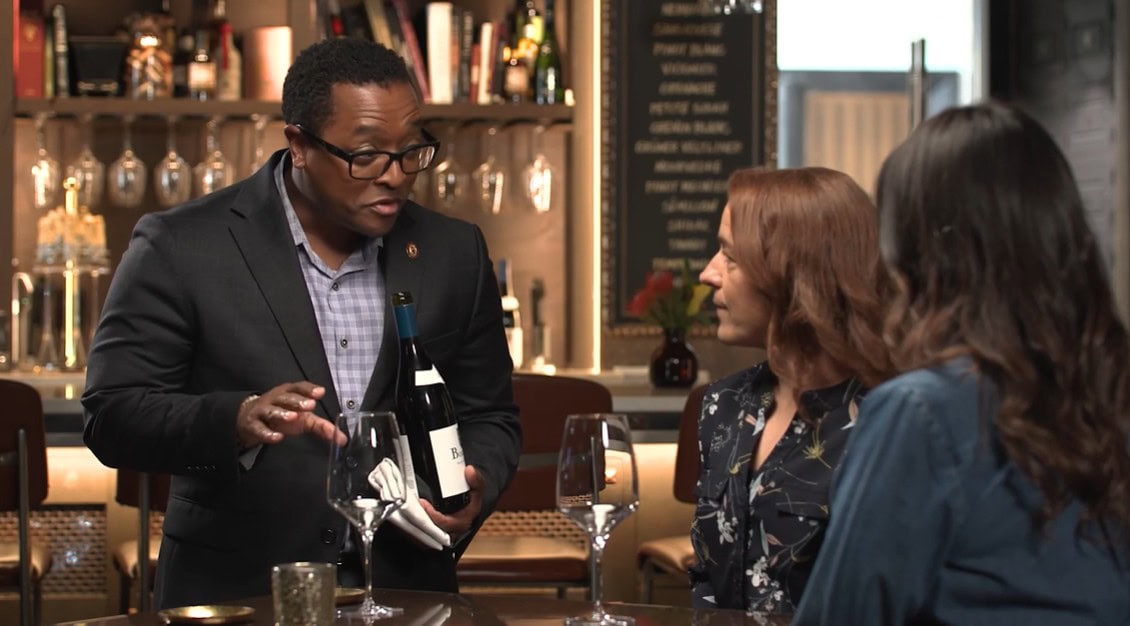
Decanting Wine for Aeration
While the right glass releases the aromas already there, many red wines need time to develop before pouring. When you open a sealed bottle, oxygen contact begins changing how the wine smells and feels. Wines that seem closed or underdeveloped often become more expressive within 20 to 40 minutes in a decanter, as tannins soften and aromatic compounds develop.
Full-bodied, tannic red wines benefit from decanting most. Extended oxygen exposure softens the tannins over time, giving the wine a smoother feel on the palate.
Low-tannin reds, such as Pinot Noir or Beaujolais, do not require a decanter; pouring into a glass and swirling introduces enough oxygen to open the wine’s aromatics. For dense, age-worthy bottles, longer decanting gives the wine time to shed any closed or muted character it has developed while aging in the bottle and express itself fully.
Some white wines benefit from decanting too. Whites made in a more reductive style can carry a closed, sulfur-driven aroma right out of the bottle, and a few minutes of air contact clears it, letting the wine’s fruit and aromatics come forward.
Wine Etiquette at the Table
Once a wine has had the chance to open up, your presentation and the right pour come into the equation. Wine etiquette at the table is about hospitality as much as function: every detail from glass placement to pour sequence serves a purpose. Wipe the bottle’s mouth after every pour, since drips on the rim affect the next pour and residue builds up over a full service.
When you are serving multiple wines, such as during a tasting or a multi-course meal, move from lightest to fullest, white wine before red wine. A tannic red wine served early creates a drying, grippy sensation that lingers on the palate and dulls sensitivity to every wine that follows.
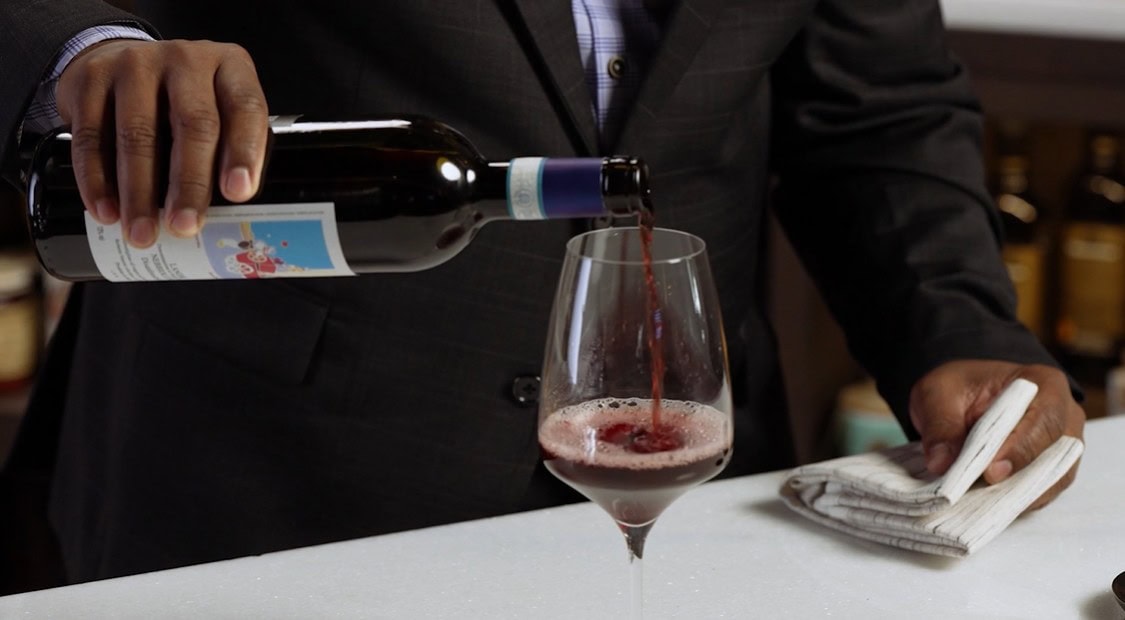
Pouring correctly is part of etiquette too: hold the bottle near its base, tilt slowly, and rotate it slightly while lifting at the finish of each pour. That rotation catches the last drop before it runs down the label, keeping the pour controlled start to finish.
Food and Wine Pairing at the Table
Etiquette shapes how you serve a wine; pairing shapes what you serve it with. Get the match right, and both the food and wine taste better than they would on their own. Food and wine pairing starts with how tannin, acidity, and sweetness in wine interact with what is on the plate. A light-bodied red disappears against a rich braise; a full Cabernet Sauvignon overwhelms a delicate fish course:
- Tannin and Fat: Fat coats the palate and softens the drying, grippy sensation tannins produce in red wine.
- Acidity and Acidic Food: Acidic foods de-emphasize perceived acidity in wine, making a higher-acid wine taste flatter.
- Sweetness and Dry Wine: Sweet food paired with a dry wine can suppress fruit and push bitterness forward.
The weight of the wine should match the weight of the dish, and those interactions become more intuitive with practice. Food and wine pairing is covered in depth in the Introductory Sommelier Course, taught exclusively by Master Sommeliers, exploring how tannin, acidity, and sweetness interact with food in practice.
Common Wine Serving Mistakes at Home
Even with the right pairing on the table, a few small oversights can undercut everything you’ve done well. Small habits make a measurable difference in how your wine tastes. If your glasses have been sitting in a cabinet, rinse them with hot water and polish them dry with a lint-free cloth before serving — detergent residue and the air in enclosed storage can leave behind odors that layer onto the wine’s aroma and appearance.
If you serve red wine too warm, the alcohol will feel hot and distracting on the finish, pushing the wine’s fruit and structure into the background. Serving white wine too warm de-emphasizes its acidity, removing the crispness and tension that hold the wine together. Serve it too cold, and you mute the flavors instead.
Pour too generous a portion and you lose the space in the glass where aromas collect above the surface. Five ounces per glass leaves you room to swirl, which drives aromatic release before you taste.
Learn How to Serve Wine With the Confidence of a Master Sommelier
The Court of Master Sommeliers is the only certification program taught exclusively by Master Sommeliers. With four levels of certification from the Introductory Sommelier Course through the Master Sommelier Diploma Exam, CMS-A builds the wine knowledge and service skills that take you from foundational competence to genuine expertise.
